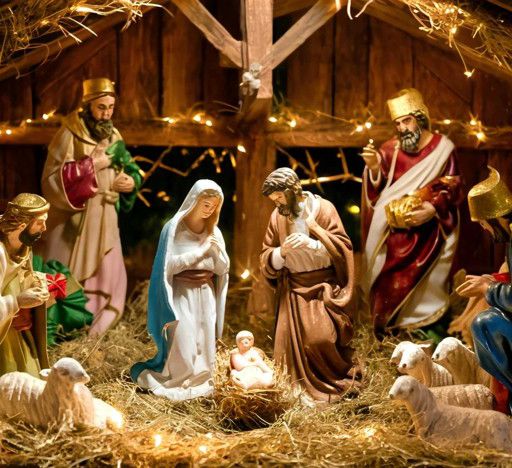
Christmas in Cyprus has always been about more than festive decorations, family gatherings and delicious food.
For generations, the holiday season was filled with customs that brought entire villages together, reflecting the island’s deep religious roots, agricultural heritage and colourful folklore.
Long before Christmas trees and modern celebrations became part of everyday life, Cypriot families welcomed the festive season with handmade bread, traditional rituals and beliefs passed down from their grandparents.
During your stay at Louis Phaethon Beach and The Ivi Mare- Designed for Adults in Paphos you will get the chance to relive local customs and taste authentic Cypriot recipes.
The twelve days between Christmas and Epiphany, known as the Dodekaimero, were particularly rich in traditions. Some expressed faith; others were believed to bring good fortune or protect the household from evil spirits.
Here are some of the fascinating Christmas traditions that once shaped the festive season in Cyprus.
Christmas Preparations: When Every Home Had Its Traditions
The Christmas Pig and the Art of Preserving Food
In rural Cyprus, Christmas preparations often began months before December.
Many families raised a pig throughout the year, traditionally slaughtering it around Christmas Eve or Christmas Day. Beyond providing food for the festive table, the custom also carried symbolic associations with purification and protection from evil.
Nothing went to waste. Families prepared traditional delicacies such as loukanika (sausages), lountza (cured pork loin), zalatina (pork preserved in jelly) and salted meats.
These foods were carefully preserved to sustain households throughout the year, when refrigeration was unavailable and farming families depended heavily on their own produce.
Although the custom has largely disappeared from everyday Christmas celebrations, many of the traditional foods it produced remain part of Cypriot cuisine today.
Christmas Bread That Was Almost Too Beautiful to Eat
A few days before Christmas, Cypriot kitchens would fill with the aroma of freshly baked bread.
Women prepared special festive loaves known as gennopittes, stavrokouloura and koumoula, decorating them with intricate patterns made from strips of dough.
Crosses, flowers and stars were carefully shaped by hand, while sesame seeds and black seeds added flavour and texture.
These breads were much more than something to serve at the table. Their designs often carried religious symbolism, reflecting the importance of Christmas in family life.
In parts of Cyprus, particularly around Paphos, families even hung the decorated breads on their walls as festive ornaments.
Before Christmas decorations became widely available, a beautifully crafted loaf could be both a symbol of faith and a source of household pride.
Wheat and Wine on the Christmas Table
Today, a Cypriot Christmas table is likely to feature roast meats, traditional sweets and plenty of family favourites.
In the past, however, many households also placed a dish of boiled wheat, known as kollyva, alongside a glass of wine.
The offering expressed gratitude for the land’s fertility and the harvest that sustained the family throughout the year.
For farming communities, Christmas was not only a religious celebration. It was also an opportunity to give thanks for the food they had grown and the blessings they hoped the coming year would bring.
New Year’s Eve: A Night of Wishes, Love and Good Fortune
Finding Love in the Flames
One of the more playful Cypriot New Year’s Eve traditions involved olive leaves and a glowing fireplace.
Family members would gather around the hearth and throw olive leaves onto the hot embers, hoping to discover whether someone they admired returned their feelings.
If a leaf jumped, crackled or burst in the heat, it was taken as a promising sign that the affection was mutual.
The ritual turned an ordinary winter evening into an occasion for laughter, teasing and perhaps a little romantic anticipation.
Today this beautiful custom is practiced only in a few villages, still offering a charming glimpse into how earlier generations found entertainment in the simplest household objects.
Leaving the Table Ready for Saint Vasilis
In Cyprus, New Year’s Day is closely associated with Saint Vasilis, known locally as Agios Vasilis.
Traditionally, families prepared a special table on New Year’s Eve, leaving out vasilopita, a festive bread containing a hidden coin, along with wine and boiled wheat.
Unlike many modern versions of vasilopita, the older Cypriot preparation was often closer to a sweet loaf, sometimes topped with sesame seeds.
Families would leave a light burning, believing that Agios Vasilis, the helper of the poor, might visit at night and bless their home.
The custom reflected a deeply rooted sense of hospitality. Even an unseen visitor was welcomed with food, light and an open heart.
Epiphany: When Folklore Came to Life
Feeding the Mischievous Skala Pountaroi
Perhaps one of the most unusual traditions of the Cypriot festive season involved the Skalapountaroi, mischievous supernatural creatures also known as Planitaroi.
According to local folklore, these troublesome spirits appeared on earth during the twelve days between Christmas and Epiphany.
They were believed to cause mischief around homes and villages, and families developed imaginative ways to encourage them to leave.
On the eve of Epiphany, women prepared xerotiana, traditional fried dough treats, and threw pieces onto their rooftops, sometimes together with sausages.
As they did so, they recited a traditional rhyme:
“Titsin, titsin loukaniko, komm atin xerotianon, na fate tziai na fyete.”
In essence, the words offered the spirits a piece of sausage and fried dough, asking them to eat and go away.
What might sound amusing today was once part of a wider world of folk beliefs, where the boundary between everyday life and the supernatural felt much closer.
The tradition is a particularly memorable example of Cyprus’s rich storytelling heritage.
Epiphany Blessings and the Children’s Reward
Epiphany is celebrated on 6 January and marks the end of the twelve-day festive period. On this day, John the Baptist baptized Jesus and this event is still celebrated until today in all the cities and villages of Cyprus.
In earlier times, children would visit homes carrying holy water and sprigs of basil or olive, sprinkling blessings on the household.
In return, they received small treats or a little money, known as pouloustrina.
For children, it was an eagerly anticipated part of the celebrations. For adults, it was another opportunity to welcome blessings into the home at the beginning of the year.
Yet another Epiphany tradition remains very much alive in Cyprus today: the Blessing of the Waters.
Following the church service, the parish priest carries the Holy Cross in a procession towards the sea or a nearby river, accompanied by local residents. As prayers and hymns fill the air, the priest throws the Cross into the water, and young men brave the chilly January temperatures to dive in and retrieve it.
The one who brings the Cross back to the surface is believed to receive a special blessing for the year ahead. It is a cherished tradition that continues to bring communities together, keeping the island’s faith and heritage alive.
Keeping the traditions alive
In the old times, Christmas was celebrated with whatever families had at hand: flour from their fields, olives from their trees, warmth from the fireplace and food prepared together.
Some traditions were rooted in Christianity, while others carried traces of older folk beliefs. Many served practical purposes, helping families preserve food, express gratitude for the harvest or strengthen relationships within the village.
As lifestyles changed, these rituals gradually changed or faded. Yet you can still discover many old traditions in the quiet villages of the island, where time seems to have stopped long ago.
Today, Christmas in Cyprus may have modernized, but the values behind many traditions remain the same: generosity, hospitality, togetherness, and the joy of welcoming loved ones home.